📌 Seasonal Guide: Salkantay Dry Season Weather
- Peak Dry Season Window: May through September features the lowest rainfall (less than 10 mm/month) and crystal-clear skies.
- Shoulder Months: April and October/November offer fewer trail crowds, lush green valleys, and moderate daytime temperatures.
- Sub-Zero Night Frost: Nighttime temperatures at Soraypampa camp drop to -5°C (23°F) in June and July; warm thermal gear is essential.
- Trail Conditions: Firm, dry singletrack with minimal mud or scree instability over the 4,630 m Salkantay Pass.
- Machu Picchu Visibility: Minimal morning cloud obscuration over the citadel and the Sun Gate.
Timing your expedition on the Salkantay Trek directly influences your trail experience: from the crispness of glacial panoramas against deep-blue Andean skies to campsite night temperatures and trail mud conditions. In the Vilcabamba mountain range, weather divides sharply into two contrasting seasons: the dry Andean winter (April to November) and the wet summer (December to March).
The Golden Window: May to September in the Vilcabamba Range
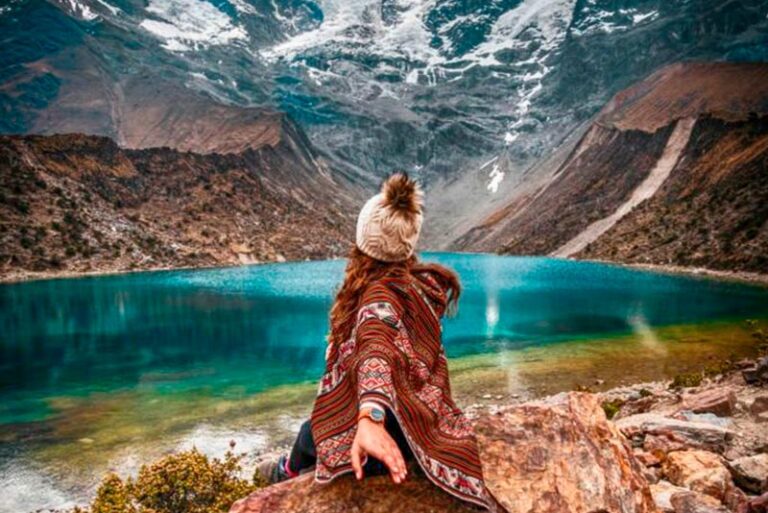
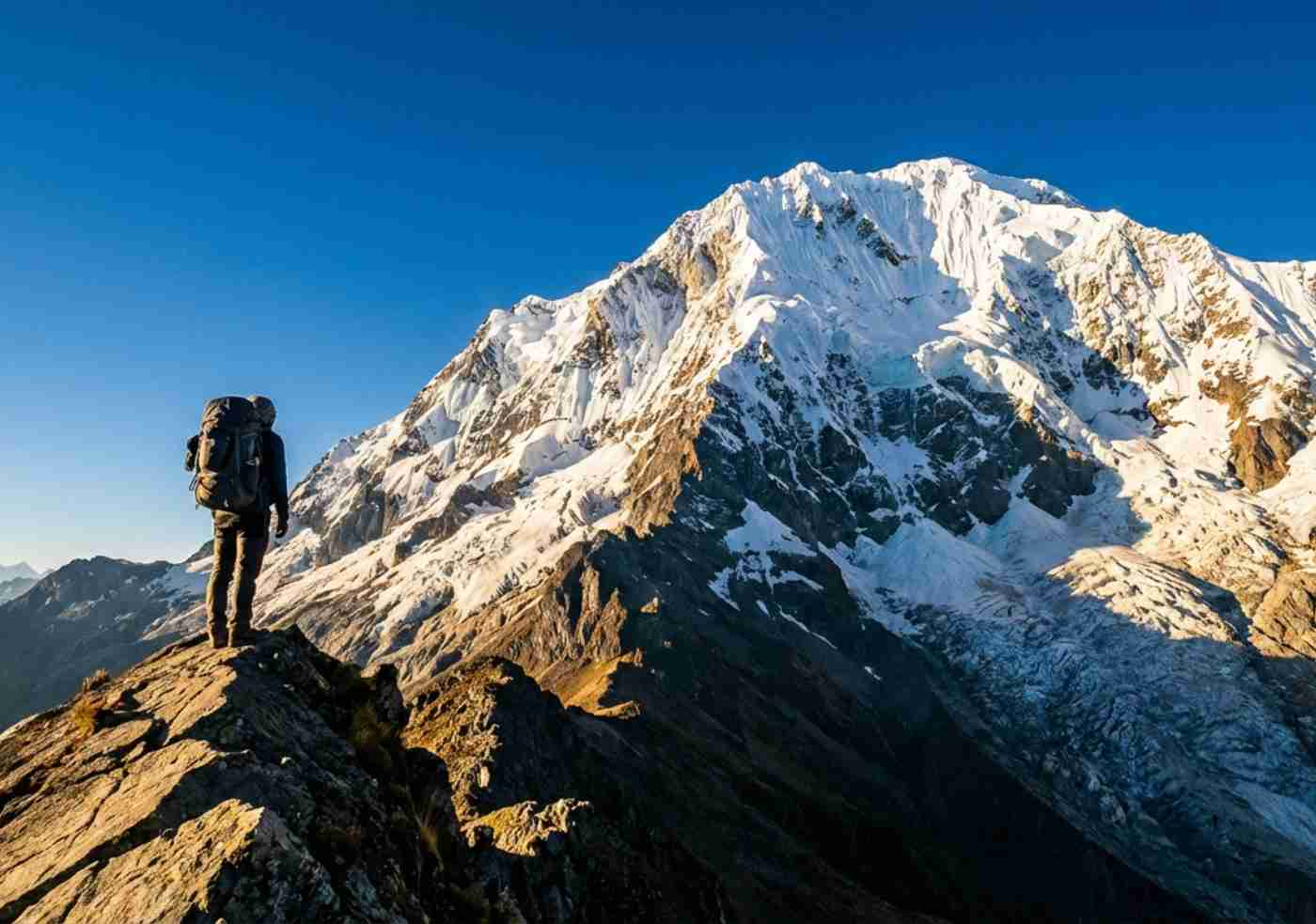
Between late May and mid-September, stable high-pressure systems dominate the southern Peruvian Andes. Daytime skies are remarkably clear, producing dazzling photographic visibility of Mount Salkantay (6,271 m / 20,574 ft) and the turquoise waters of Humantay Lake.
While days are comfortably sunny with trail temperatures between 16°C and 20°C (61°F to 68°F), the trade-off is intense night radiation: without cloud cover to trap ground warmth, temperatures at the high camp of Soraypampa plunge below freezing, frequently dipping to -5°C (23°F) between 2:00 AM and 5:00 AM.
Month-by-Month Weather Progression: April Through November
April (The Green Transition): Rain tapers off rapidly while valleys remain lively green with wildflowers. Daytime temperatures are mild, crowds are low, and passes are clear of heavy snow.
May (Optimal Conditions): Perhaps the finest month on trail. Low precipitation, moderate crowds, and night frost is less severe than in mid-winter.
June & July (Deep Winter): Driest months of the year with virtually zero rainfall. Star gazing over Soraypampa is magnificent, but night temperatures are the coldest of the season. 4-season down sleeping bags are mandatory.
August & September (Warm Days, Clear Passes): Warm daytime hiking with sunny afternoons. Occasional dry gusts of wind on the pass. September marks the beginning of spring warmth in the lower valleys.
October & November (Spring Shoulder): Warmer nights and fewer hikers on trail. Occasional brief afternoon showers that freshen the cloud forest without blocking the pass.

Monthly Salkantay Trek Weather Comparison
| Month | Rainfall Probability & Sky Conditions | Day / Night Temperature Range |
|---|---|---|
| April | Low-moderate • Green landscapes and light showers. | 18°C / 2°C (64°F / 36°F) |
| May & June | Very low • Brilliant clear blue skies daily. | 17°C / -3°C (63°F / 27°F) |
| July & August | Lowest rainfall • Intense sunshine & extreme night frost. | 16°C / -5°C (61°F / 23°F) |
| September | Low • Warming daytime breeze and clear passes. | 19°C / 0°C (66°F / 32°F) |
| October & Nov | Moderate • Warm days and occasional rain showers. | 20°C / 4°C (68°F / 39°F) |
Thermal Gear Guide for Sub-Zero Nights
Even during the sunniest dry-season weeks, underestimating the freezing night chill at Soraypampa is the most common mistake hikers make. Inka Jungle Tour outfits all guests with high-insulation 4-season Eureka camping tents and thermal foam mats. However, your personal sleep system must include:
A down sleeping bag rated to at least -10°C (14°F), heavyweight thermal merino wool base layers for sleeping, clean dry socks reserved exclusively for inside your tent, a warm fleece beanie, and glove liners. Packing these ensures deep, restorative sleep in the high mountains.