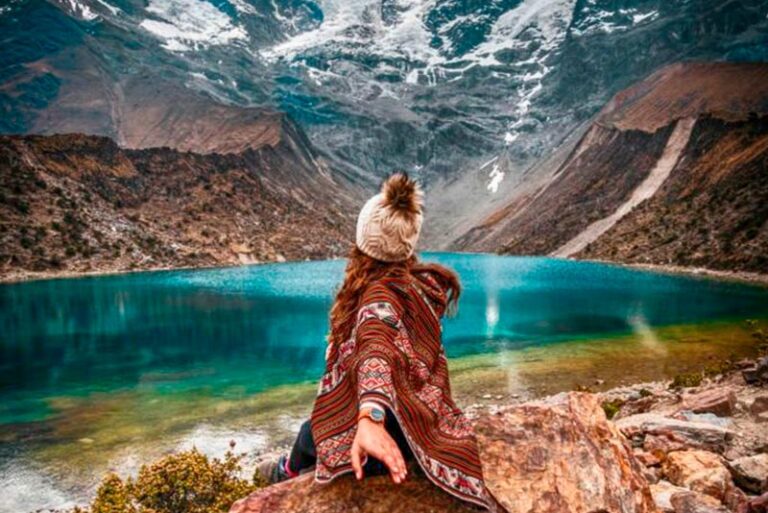
Luggage and Weight Criteria: Packing for the Salkantay Trek relies on the three-layer technical clothing system and a split between your daily daypack (20 to 30 liters for water and immediate warmth) and your duffel bag. Operated directly by Inka Jungle Tour, authorized local operator in Cusco with MINCETUR licensing, each traveler is allocated up to 5 kg of personal luggage carried by pack horses and local muleteers, guaranteeing animal welfare, lightweight trail hiking, and thermal comfort in 4-season tents for max 2 guests.
20-30 Liters (4 to 5 kg with water, rain gear, and kit)
5 kg strict limit per person (dry clothes and hygiene)
3-layer system (moisture-wicking, thermal fleece, outer shell)
Direct local operator with official MINCETUR license
The secret to fully enjoying the Salkantay Trek to Machu Picchu is not packing heavily, but selecting functional, lightweight essentials. On an expedition traversing from 4,630 m (15,190 ft) with sub-zero freezing nights down to the subtropical cloud forest at 2,000 m (6,560 ft), mastering luggage weight prevents muscle fatigue and guarantees camp comfort.
The Packing Strategy: Your Daypack vs. Pack Horses
Before packing your gear in Cusco, it is vital to understand how weight is distributed across the trek:
- Hiking Daypack (20-30L): You carry this with you during the 6 to 8 hours of daily walking. It should hold only trail essentials: water (minimum 2 liters), rain poncho, windbreaker, snacks, sun protection, and camera. Total weight should not exceed 4 to 5 kg (9 to 11 lbs).
- Duffel Bag (Provided by our agency): Transported by pack horses and muleteers from Soraypampa across intermediate camps. Under strict animal welfare regulations, the allowance is 5 kilograms (11 lbs) per traveler for spare clothing, evening hygiene items, and rest sandals.

Technical Apparel: The Three-Layer System
On Salkantay, you will experience temperature swings exceeding 25 degrees Celsius within 48 hours. Standard cotton traps perspiration, causing severe chills once you stop moving. The proven mountain method is technical layering:
- Base Layer (Next-to-skin): Synthetic thermal tops (polyester or polypropylene) or merino wool. Wicks moisture away from the skin, keeping your core completely dry.
- Mid Layer (Insulation): Fleece jacket or lightweight down / synthetic loft jacket. Traps radiant body heat at Soraypampa base camp and during the chilly morning climb to the pass.
- Outer Layer (Weather Shell): Waterproof, breathable jacket with technical membrane (Gore-Tex or equivalent) and windstopper. Shields you from glacial gusts at Salkantay Pass (4,630 m) and sudden mountain downpours.

Technical Matrix: What to Buy Ahead vs. What to Rent in Cusco?
| Item | Technical Recommendation | Buy at Home or Rent in Cusco? |
|---|---|---|
| Hiking Boots | Mid-cut ankle support, aggressive lug sole (Vibram), waterproof membrane | Buy in your home country: Must be thoroughly broken in weeks prior to departure to avoid crippling blisters. |
| Sleeping Bag | Down or high-loft synthetic with comfort rating of −5 °C to −10 °C (14°F to 23°F) | Rent in Cusco: You can reserve clean, sanitized, certified high-mountain bags directly through our operations team. |
| Trekking Poles | Telescopic with quick-lock levers and alpine baskets | Rent in Cusco: Avoids airport baggage security hassles and overhead bin restrictions. |
| Headlamp | Rechargeable or alkaline LED (minimum 200 lumens) | Buy beforehand: Indispensable for packing your duffel bag before dawn in unlit camps. |
Frequently Asked Questions About Salkantay Luggage
Where can I leave my main suitcase with the rest of my travel clothes?
You can store your large suitcase or excess luggage completely free of charge and securely at your hotel luggage room in Cusco or inside our agency central storage facility. Upon returning from the trek on Day 5, you pick up your belongings with zero extra fee.
What footwear is best suited for the Salkantay Trek?
We strongly recommend mid-cut hiking boots with ankle stabilization and Vibram-style rubber traction. The trail alternates between loose scree, damp moraine, and steep stone descents; firm ankle support prevents sprains during the long downhill descent on Day 2.
Are there electrical outlets to charge cameras or phones at the campsites?
At Soraypampa camp (Day 1), solar power is very limited. From Santa Teresa (Day 3) and Aguas Calientes (Day 4) onward, standard electricity is available. We recommend packing a portable power bank (10,000 to 20,000 mAh) to keep your camera and phone charged at high altitude.