Peru, globally recognized for its vast biodiversity, cultural richness, and exceptional gastronomy, also stands out in agricultural exports, particularly in coffee production. Ranking among the top ten global exporters, Peruvian coffee is a highly prestigious product. Within this context of agricultural innovation and experimentation, an exotic variety has emerged, captivating the attention of demanding coffee aficionados: Misha Coffee, also known as Peruvian “poo” coffee.
📌 Specialty Brief: Misha Coati Dung Coffee in Peru
- Especie Animal: Coatí andino o Uchunari (Nasua nasua), mamífero de bosque nublado y selva alta.
- Microclima de Producción: Valles cálidos de ceja de selva (Chanchamayo y provincia de La Convención en Cusco).
- Transformación Digestiva: Las enzimas del tracto intestinal del animal desintegran la pulpa y neutralizan los compuestos astringentes.
- Perfil Sensorial Típico: Ausencia casi total de amargor, acidez balanceada y notas pronunciadas a cacao fino, miel y frutas tropicales.
- Precio Internacional en Verde: Oscila entre $200 y $600 USD por kilogramo en cafeterías de especialidad.
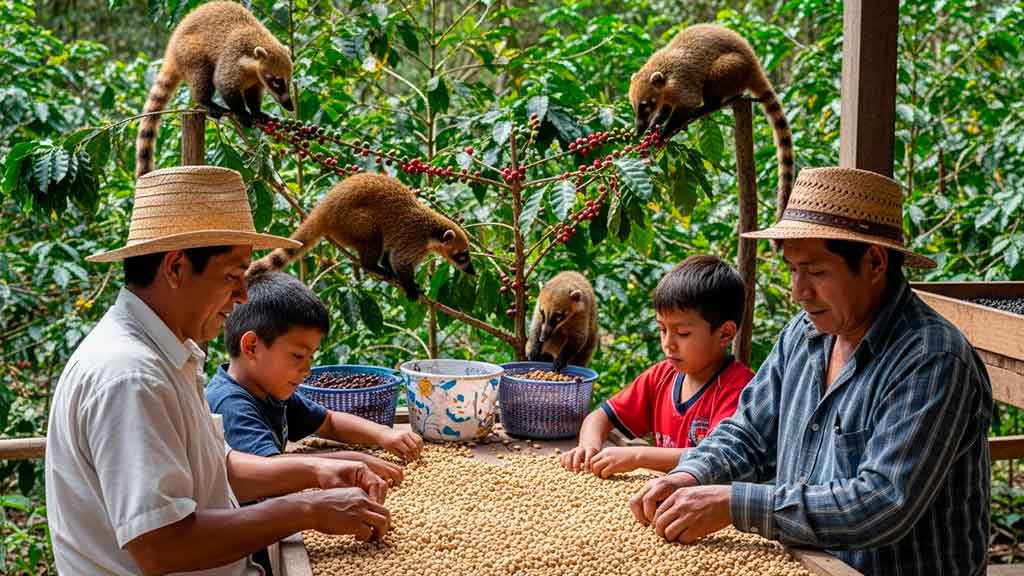
This coffee is produced through a unique process involving a small mammal called the coatí (or Uchunari). The coatí, an animal resembling a mix between a cat, a raccoon, and a monkey, inhabits the South American jungles. This agile, omnivorous creature, with its long, flexible snout, moves effortlessly on the ground and through the trees.
| Coffee Variety | Processing Method & Tasting Profile |
|---|---|
| Café Misha de Coatí (Perú) | Fermentación enzimática natural en el tracto digestivo del coatí andino. Sabor con cuerpo sedoso, ausencia casi total de amargor y notas a cacao y miel ($200 a $600 USD/kg). |
| Kopi Luwak (Indonesia) | Procesado por la civeta de palma asiática en clima tropical insular. Perfil pesado, terroso y con baja acidez ($300 a $800 USD/kg). |
| Café Arábica Especial Lavado | Selección manual del agricultor y fermentación en tanques húmedos. Acidez cítrica brillante con notas florales y frutales ($25 a $60 USD/kg). |
| Café Comercial Estándar | Cosecha mecanizada masiva y secado rápido industrial. Sabor amargo penetrante con notas a madera y ceniza tostada ($10 a $18 USD/kg). |
The Coatí’s Unique Role in Bean Fermentation
The key to Misha Coffee lies in the coatí’s role in the bean fermentation process. Farmers feed these animals coffee cherries along with other fruits. As the cherries pass through the coatí’s digestive system, the enzymes present partially break down the coffee cherry.
While the bean itself is not digested, this passage through the animal’s digestive system modifies the proteins that typically contribute bitterness to the coffee. The beans, once excreted, are carefully collected, washed, and dried. Subsequently, they are roasted and ground. The result is a coffee with a unique flavor profile, described by experts as full-bodied, almost bitterness-free, with subtle notes of Peruvian jungle fruits.
A Luxury Coffee with Jungle Flavor
Peruvian Misha Coffee has positioned itself as one of the most expensive coffees in the world. Its price reflects the complexity of its production and its status as a luxury product.
This coffee shares similarities with the famous Kopi Luwak of Indonesia, where a similar process is carried out using civet feces. In Peru, however, the coatí is the protagonist of this natural process that enhances the bean’s characteristics.
Misha Coffee is an example of how the interaction between nature and agriculture can lead to exceptional products. This process not only highlights the richness of Peruvian biodiversity but also offers an incomparable sensory experience for coffee connoisseurs.
Discover the Soul of Peru: Travel and Nature Experiences
Peru offers immense diversity, from the vastness of the Andes to the lush Amazon basin. Explore its unique landscapes and discover the fascinating connection between culture, nature, and daily life. If you want to immerse yourself in the rich coffee tradition and other secrets of the jungle, we invite you to explore options for a Tour of the Coffee Route.