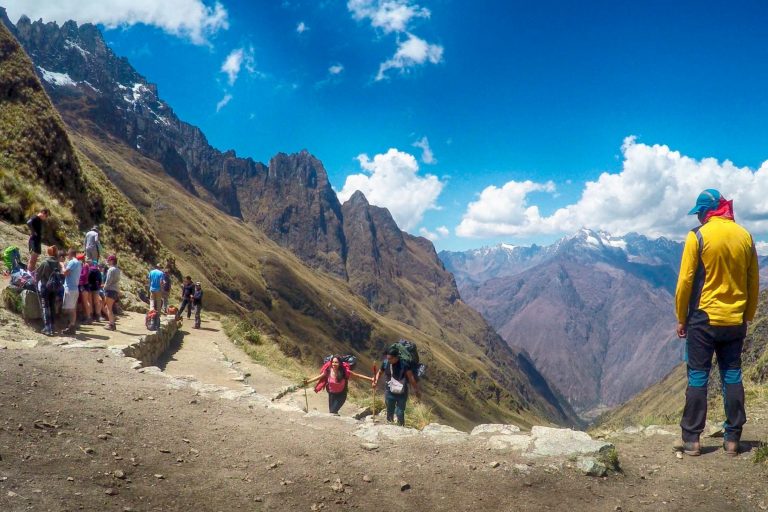
Day 2 of the Classic Inca Trail 4 Days brings the toughest physical test of the expedition: crossing the famous Warmiwañusqa Pass —or Dead Woman’s Pass— at 4,215 m (13,828 ft). Conquering this high mountain pass does not require sprinting endurance; it comes down to steady diaphragmatic breathing, disciplined pacing, and mental focus to climb roughly 1,200 vertical meters (3,937 ft) of ancient stone staircases.
📌 Technical Profile: Day 2 at Dead Woman’s Pass
- Trail High Point: Warmiwañusqa Summit at 4,215 m (13,828 ft), with roughly 40% less effective oxygen pressure than sea level.
- Daily Elevation Gain: Net climb of 1,200 m (3,937 ft) from Wayllabamba, followed by a steep 600 m (1,968 ft) descent to Pacaymayo.
- Distance and Duration: 11 km (6.8 miles) covered in 6 to 7 hours of measured mountain walking.
- Summit Temperature: Chilly Andean winds between 2°C and 6°C (35°F to 43°F), calling for immediate warm layers.
- Trekking Poles Essential: Dual poles with rubber protective tips take substantial impact off knees on stone steps.
The Anatomy of the Ascent: From Llulluchapampa to the Summit
Your day begins at 05:30 AM at Wayllabamba campsite (3,000 m / 9,842 ft). The initial stretch climbs steadily through native Andean cloud forest along a rushing mountain stream, reaching the rest and checkpoint area of Llulluchapampa at 3,800 m (12,467 ft). Above this tree line, vegetation gives way to high alpine ichu grasslands, opening up views of the saddle pass against the sky.
The final two kilometers up to the pass are the most mentally demanding. The steep incline across uneven Inca steps requires pairing each step with steady, deep breaths of cold air. Our guides pace the group using the “Andean step” method: short, rhythmic strides without long seated breaks that cause leg muscles to stiffen, ensuring you reach the top with steady momentum.

The Steep Descent to Pacaymayo: Protecting Knees and Joints
Reaching the summit at 4,215 m (13,828 ft) brings a tremendous sense of accomplishment with panoramic views of the Vilcabamba mountain range. However, the physical effort is only half complete: descending to Pacaymayo camp (3,600 m / 11,811 ft) involves over two hours of continuous walking down more than a thousand polished stone steps.
Going downhill places substantial impact on knee joints, patellar tendons, and quadriceps. Using two trekking poles adjusted to proper downhill height absorbs up to 25% of that impact with every step, preventing knee fatigue and ensuring your legs stay fresh for Day 3.
Day 2 Waypoints: Classic Inca Trail
| Daily Waypoint | Elevation & Trail Features |
|---|---|
| Wayllabamba (Departure) | 3,000 m (9,842 ft) • Early start through humid Andean forest. |
| Llulluchapampa (Rest Stop) | 3,800 m (12,467 ft) • Edge of tree line • Water refill and energy snacks. |
| Warmiwañusqa Pass (Summit) | 4,215 m (13,828 ft) • Chilly wind (3°C) • High mountain panorama. |
| Pacaymayo (Campsite) | 3,600 m (11,811 ft) • Stone staircase descent • Hot lunch and rest. |
Nutrition and Hydration Strategies for High Mountain Passes
Digestion slows down above 4,000 meters due to reduced oxygen delivery to internal organs. Avoid heavy, greasy meals during the climb to Warmiwañusqa. Instead, consume small amounts of quick-burning carbohydrates every 30 minutes —such as dried fruit, dark chocolate, and energy bars— and take regular sips of water with electrolytes to prevent dehydration from rapid breathing.
Spending at least 48 hours acclimatizing in Cusco at 3,400 m (11,155 ft) before starting the trek is critical for crossing the pass comfortably. Our guides check resting oxygen saturation (SpO2) with fingertip pulse oximeters at Llulluchapampa before the final climb, ensuring every traveler ascends within safe physiological margins.
Upon arriving at Pacaymayo camp, our crew welcomes you with warm herbal teas and hot washcloths. A guided stretching session for calves and hamstrings helps prevent soreness, leaving you ready to tackle Day 3 with renewed energy.