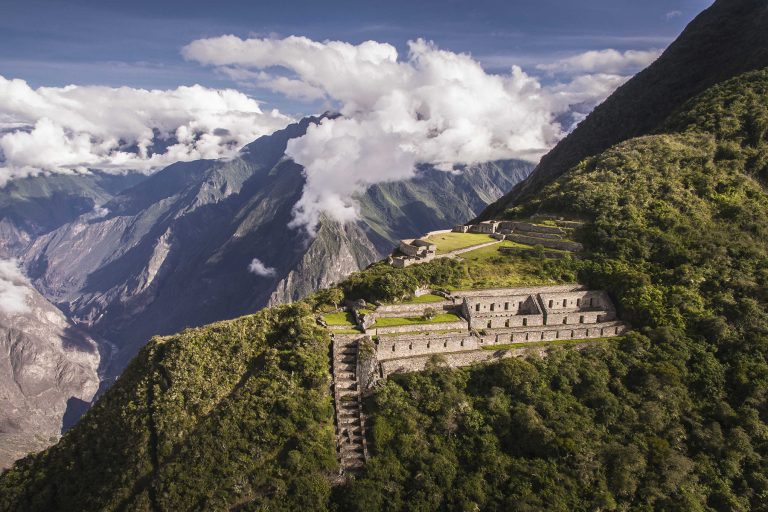
Before taking on the Choquequirao Trek, travelers commonly have questions regarding trail infrastructure, communication, physical readiness, and daily campsite routines. Here are the practical facts directly from our Cusco mountain expedition team.
Essential Trail Logistics & Practical FAQs
Is Choquequirao harder than the Classic Inca Trail or Salkantay?
Yes. In terms of muscular exertion and vertical elevation gain/loss per day, Choquequirao is significantly more demanding than both the Classic Inca Trail and Salkantay. While Salkantay crosses a higher pass (4,630m), Choquequirao requires descending 1,500m down steep canyon switchbacks and immediately climbing 1,400m up, repeating the challenge on the return trip. However, because it stays below 3,100 meters, altitude sickness is far less severe.
What are the bathroom and shower facilities like on trail?
Campsites on the route feature basic mountain facilities. At Chiquisca and Santa Rosa, rustic flush toilets and cold water sinks are available. At Marampata, local family homestays provide flush toilets, basic sinks, and hot water showers for a nominal fee of 10 PEN. Hand sanitizer and your own toilet paper should always be kept in your daypack.
Is there cell phone signal or electricity to charge devices?
Cell phone reception is completely absent inside the Apurímac canyon. At Marampata and the Capuliyoc trailhead, intermittent Claro and Bitel mobile signal can occasionally be caught on ridge lines. There are no public wall outlets to recharge electronics, so bringing a high-capacity power bank (15,000 to 20,000 mAh) is mandatory for camera batteries and smartphones.
Can I hire an emergency riding horse if I am too exhausted to climb?
Yes. Local muleteers based in Cachora and Capuliyoc can arrange saddle horses for hikers experiencing extreme muscle fatigue or minor injuries. The standard rate is approximately 80 to 100 PEN per day, paid directly to the horse handler in cash. Note that on steep, rocky downhill switchbacks, you must still dismount and walk for safety.
How does Choquequirao compare to Machu Picchu?
While Machu Picchu is fully developed with train access, paved stone paths, and thousands of daily tourists, Choquequirao is an authentic remote wilderness ruins complex. Only 30 to 40 hikers visit Choquequirao per day, allowing you to walk freely among untouched agricultural terraces, ceremonial plazas, and high cloud forest temples in total solitude.
Ready to Conquer the Choquequirao Trek?
The true lost city of the Incas: dramatic Apurímac canyon vistas, remote archaeological solitude, and complete expedition support.