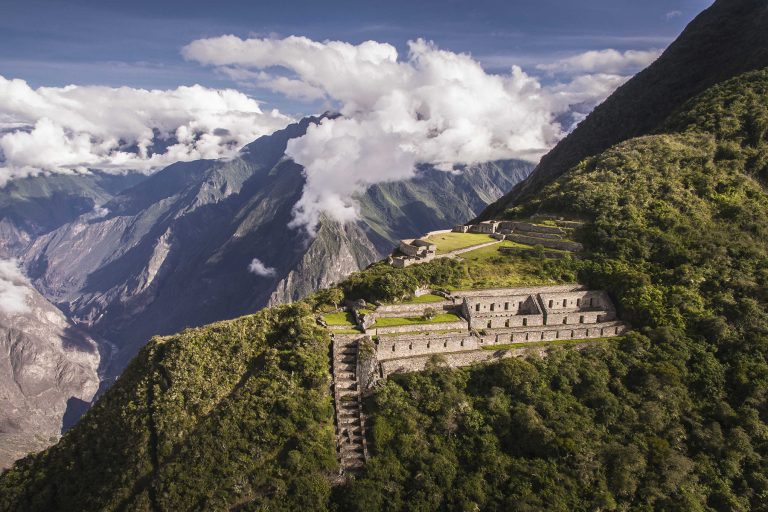
Best Time to Hike Choquequirao: Weather & Seasons %currentyear%
Timing your expedition to the Choquequirao Trek requires analyzing seasonal rainfall patterns in the Southern Peruvian Andes alongside the microclimate of the Apurímac River gorge. Choosing the right month ensures stable trails, clear vistas, and safe river crossings.
Occasional afternoon mud, very low trail traffic, excellent photographic conditions.
Rainy Season
November – March
Heavy Andean rainstorms, swollen rivers, high humidity, cloud cover over ruins.
Landslide hazard on canyon walls, slick muddy descents. We discourage trekking in January & February.
Trail Safety Warning: The steep walls between Capuliyoc and Chiquisca are subject to rockfall during extended heavy downpours. For safety reasons, professional mountain agencies suspend or reroute departures during the peak rainy months of January and February.
Monthly Climate & Temperature Overview
Temperatures along the Choquequirao route vary significantly depending on elevation:
Capuliyoc (2,900m) & Marampata (2,870m): Daytime highs of 18°C to 22°C (64°F – 72°F); nighttime lows of 4°C to 8°C (39°F – 46°F).
Apurímac River Floor / Playa Rosalina (1,500m): Daytime highs often surpass 30°C to 33°C (86°F – 91°F); nighttime temperatures hover comfortably around 18°C to 20°C (64°F – 68°F).
Choquequirao Ruins (3,050m): High cloud-forest climate. Morning mists frequently clear by 9:00 AM, revealing warm sunny conditions with pleasant mountain breezes.
Official Mountain Expedition
Ready to Conquer the Apurímac Canyon & Choquequirao?
Trek 4 days into the last Inca citadel with licensed mountain guides, pack mules, 4-season camps, and certified WAFA wilderness first responders.