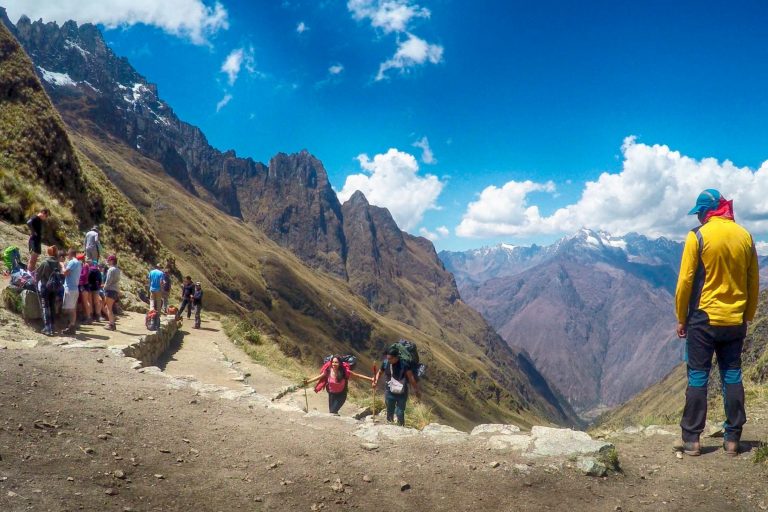
Behind every hot meal served at high-altitude mountain camps, behind every rainproof tent pitched before storms roll in, and behind the reliable transport of equipment on the Classic Inca Trail 4 Days is a dedicated group of men: the Andean porters, often called contemporary chaskis. Originating from Quechua-speaking rural communities across the Sacred Valley and the highlands of Lares above 3,800 m (12,467 ft), these workers are the backbone of the trail. Choosing an operator with certified ethical standards is an essential moral responsibility for every trekker.
📌 Ethical Framework: Peru’s Porter Protection Law
- Strict Legal Weight Limit: Maximum 20 kg (44 lbs) per porter, electronically verified at SERNANP checkpoints in Piscacucho.
- Fair Living Wages: Compensation above the legal minimum set by Porter Law No. 31614 plus comprehensive accident insurance.
- Wholesome Nutrition: Consuming the same nutritious hot meals as guests, with calorie-dense balanced portions.
- Quality Mountain Gear: Ergonomic carrying packs, lumbar support belts, dedicated porter sleeping tents, and proper hiking shoes.
- Protected Rest: Adequate uninterrupted sleep in spacious tents with insulating ground mats.
The Guardians of the Trail and Their Andean Communities
The vast majority of porters come from high-altitude farming villages such as Willoq, Patacancha, Huilloc, and Cuncani, perched above 3,800 m (12,467 ft) in the mountain valleys of Cusco. Working agricultural plots on steep slopes since childhood and adapted to thin Andean air, they possess remarkable cardiovascular endurance.
However, natural stamina should never be used as an excuse for poor working conditions. Porters are fathers, community leaders, and farmers who rely on seasonal trekking income to put children through school, repair family homes, and purchase potato seed and fertilizer for their crops.

The Hidden Reality Behind Budget Cut-Rate Tours
In Cusco’s street travel market, agencies competing strictly on low prices cut operational costs at the expense of human dignity. In substandard operations, porters are overloaded with illegal weights exceeding 28 kg (61.7 lbs), forced to sleep on cold dirt floors in dining tents without sleeping mats, and fed tourist meal scraps.
At Inka Jungle Tour, responsible tourism is a core standard. We strictly follow Peru’s Porter Law (Law No. 31614): we provide comprehensive wilderness accident insurance, warm technical jackets, dedicated porter sleeping tents, and the same balanced, protein-rich hot meals prepared by our camp cooks.
Porter Welfare Standards & Rights
| Operational Standard | Inka Jungle Tour Ethical Practice |
|---|---|
| Weight Checkpoint | Digital scale at briefing and SERNANP check • Strictly 20 kg (44 lbs) maximum. |
| Wage Policy | Timely pay exceeding official union baselines established by national law. |
| Daily Nutrition | Full breakfast, hot lunch, and hearty dinner • Zero leftover scraps. |
| Camp Accommodations | Exclusive waterproof sleeping tents equipped with thick insulating mats. |
| Medical Coverage | Active medical and evacuation policy for trail emergencies. |
How to Be a Responsible Hiker on the Trail
As a traveler, your daily habits on the trail have a direct impact on porter wellbeing. Strictly respect the 6 kg (13.2 lb) weight allowance for your personal duffel bag so porters do not face checkpoint penalties. Always greet them respectfully on the path (“Allianllachu!” in Quechua), step to the mountain side of narrow stairways to give them the right of way, and take time to connect during camp breaks.
The Thank-You Gathering on the Final Camp Night
During the third night at Wiñay Wayna camp (2,650 m / 8,694 ft), hikers and crew gather after dinner for the traditional farewell ceremony. Each porter introduces himself, shares his home community, and receives the group’s collective tip envelope. Seeing their smiles and shaking hands shaped by Andean farming is often the most touching memory travelers take home from Peru.
Beyond respectful conduct on the trail, taking an interest in their Quechua heritage enriches your journey. Many porters possess deep knowledge of wild medicinal plants such as chachacoma and muña; talking with them during relaxed camp afternoons gives you authentic insight into living Andean traditions that no guidebook can replicate.