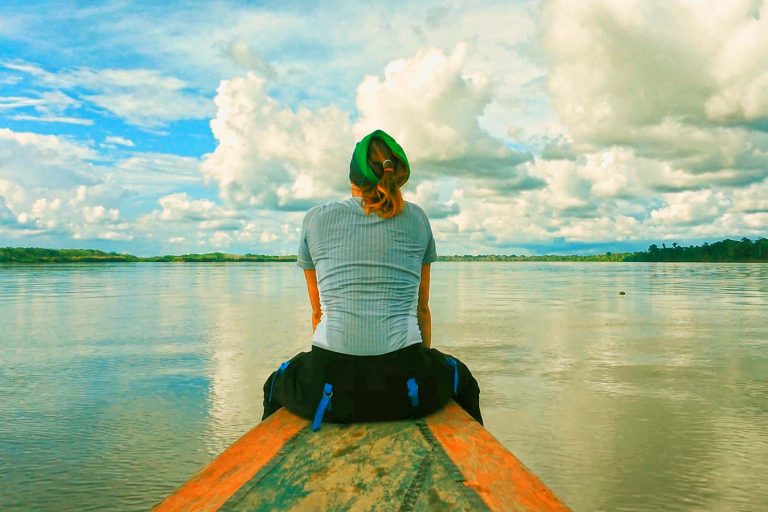
Best Time to Visit Iquitos: River Seasons & Weather %currentyear%
Iquitos and the Peruvian Amazon basin experience a tropical rainforest climate without dramatic temperature shifts between summer and winter. Average daytime highs remain between 30°C and 33°C throughout the year. Instead of temperature seasons, local life and wildlife viewing are dictated by the hydrological cycle of the Amazon River: High Water Season vs. Low Water Season.
High Water Season (Creciente): December to May
During these months, runoff from Andean snowmelt and mountain rain swells the Amazon River and its tributaries, raising water levels by up to 10 to 12 vertical meters.
Ecological Conditions: Thousands of hectares of lowland forest flood, creating expansive igapó water forests.
Navigation Advantages: Outboard motorboats can navigate deep into forest channels and mirror lagoons that are dry sandbanks later in the year. You explore the middle canopy from boat level, bringing you eye-to-eye with monkeys, sloths, and perched raptors.
Considerations: Some hiking trails become submerged, requiring wooden boardwalks or boat-based exploration. River beaches disappear.
Low Water Season (Vaciante): June to November
As Andean rains taper off, the Amazon River recedes to its lowest channels, exposing extensive white sandbars and mudflats.
Ecological Conditions: Forest trails dry out, opening extensive ground access for deep botanical hikes and primary forest walks.
Wildlife Advantages: River dolphins, caimans, and wading herons concentrate in remaining deeper river pools, making them easier to observe. Migratory shorebirds flock to exposed sandbanks.
Weather Profile: Rainfall is less frequent (though brief afternoon squalls still occur), with more continuous hours of clear sunshine.
Monthly Rainfall & Temperature Comparison
Month
Avg High / Low (°C)
Rainfall Days
River Level
Best Activity Focus
Dec – Feb
31°C / 22°C
16 – 18 days
Rising rapidly
Flooded forest boat safaris, blooming plants.
Mar – May
30°C / 23°C
18 – 20 days
Peak High Water
Canopy boat navigation, dolphin spotting.
Jun – Aug
32°C / 22°C
10 – 13 days
Falling
Forest trail hiking, sandbank birdwatching.
Sep – Nov
33°C / 23°C
12 – 14 days
Peak Low Water
Caiman night spotting, piranha fishing.
What is a “Friaje”?
Between May and August, cold Antarctic air masses periodically travel up through South America into the Amazon basin. Known locally as a friaje, temperatures can drop suddenly to 16°C or 18°C for 2 to 3 days, accompanied by grey skies and sustained winds. Packing a windbreaker or light fleece ensures warmth during morning boat rides if a cold front passes through.
Amazon River Jungle Expedition
Navigate the Deep Amazon from Iquitos
Boat navigation on the world’s largest river, pink dolphin spotting, night caiman safaris, and protected primary rainforest lodge stays.