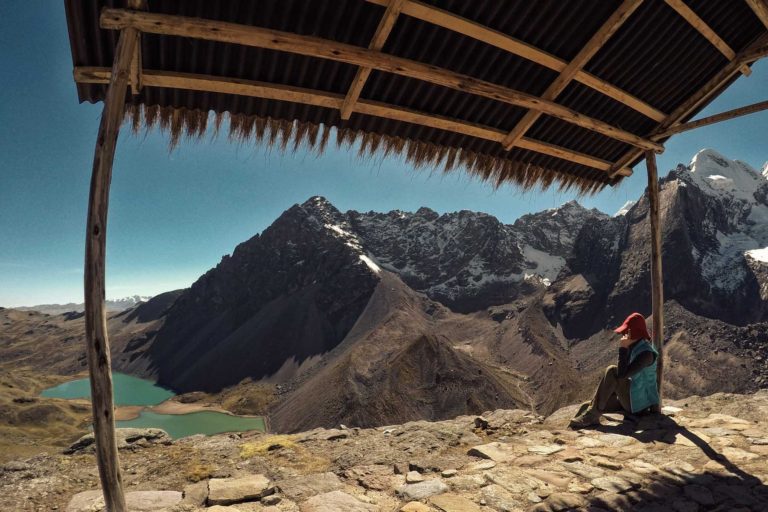
Preparing your gear for the Ausangate Trek requires treating it as a true alpine expedition. While treks like the Inka Jungle or Salkantay dip into humid cloud forests where lightweight clothing works well, Ausangate remains above 4,200 m (13,780 ft) at all times, with nighttime temperatures routinely dropping to -10°C or -15°C (5°F). Packing the correct technical layers is not just a comfort preference—it is your frontline defense against hypothermia and severe altitude sickness.
1. The 3-Layer System for Sub-Zero Mountain Hiking
Avoid heavy single coats; instead, pack a modular system of technical layers that you can adjust throughout the day as your body warms up on climbs and cools down during rests:
- Base Layer (Moisture-Wicking): Merino wool or synthetic thermal top and bottoms (avoid cotton, which traps sweat, stays damp, and triggers rapid chilling).
- Mid Layer (Thermal Insulation): Breathable grid fleece jacket plus a high-fill lightweight down jacket (700-800 fill power down or synthetic equivalent) that packs down compact into your daypack.
- Outer Layer (Hard Shell): Windproof and waterproof jacket (Gore-Tex or equivalent 15,000 mm waterproof membrane) with an adjustable storm hood and pit zips for ventilation during steep ascents.
- Trekking Pants: Water-resistant softshell pants plus thermal long underwear for frosty mornings and evenings.
2. Sleeping System & Footwear
- Four-Season Sleeping Bag: Must have an official comfort rating of -10°C to -15°C. If your personal bag is rated for moderate weather, rent an alpine down sleeping bag from our Cusco office prior to departure.
- Thermal Sleeping Pad: High R-value insulated sleeping mat (R-value ≥ 4.0) to block ground freeze while sleeping on frozen Andean turf.
- Mountain Trekking Boots: Sturdy, well-broken-in waterproof high-ankle hiking boots with deep Vibram lug soles for grip on steep moraine gravel and damp glacial rock.
- Socks: 3-4 pairs of dense merino wool hiking socks (plus one sacred dry pair kept strictly for inside your sleeping bag).
3. Head, Hands & Alpine Sun Protection
- Thermal Gloves: One pair of thin touch-screen liner gloves plus one pair of windproof, waterproof insulated ski-style mountaineering mittens or gloves.
- Thermal Beanie & Neck Gaiter: Fleece or merino wool hat that covers your ears completely, plus a buff or balaclava to shield your throat from dry, freezing alpine gusts.
- High UV Sunglasses (Category 3 or 4): High-altitude UV radiation is intense. Snow reflection and white glacial scree can cause photokeratitis (snow blindness) without UV400 polarized eye protection.
- High SPF Sunscreen & Zinc Lip Balm: SPF 50+ mineral sunscreen reapplied every 2 hours, and petroleum or zinc lip balm to prevent painful wind chapping.
4. Daypack & Electronics in Freezing Cold
- Daypack (25 to 30 Liters): Comfortable day backpack with a padded hip belt to carry your daily water, layers, snacks, camera, and rain cover.
- Trekking Poles: Essential for protecting your knees on steep 600-meter descents over scree and loose gravel.
- Water Storage: Insulated thermos flask (for hot tea) plus 2-liter hydration bladder or Nalgene wide-mouth bottles. Caution: Hydration pack drinking hoses will freeze solid above 4,700 m without neoprene insulation.
- Power Banks & Spare Batteries: Sub-zero cold depletes lithium-ion camera and smartphone batteries in minutes. Keep your phone and electronics inside internal jacket pockets close to body heat, and pack a 20,000 mAh portable charger.
- Swimsuit & Microfiber Towel: For enjoying the thermal mineral pools in Pacchanta at the end of the trek.
Explore Mount Ausangate & Pristine Glacier Lagoons
Trek over 4,300 meters above sea level with WAFA-certified wilderness guides, emergency oxygen in van, and relaxing hot springs in Pacchanta.