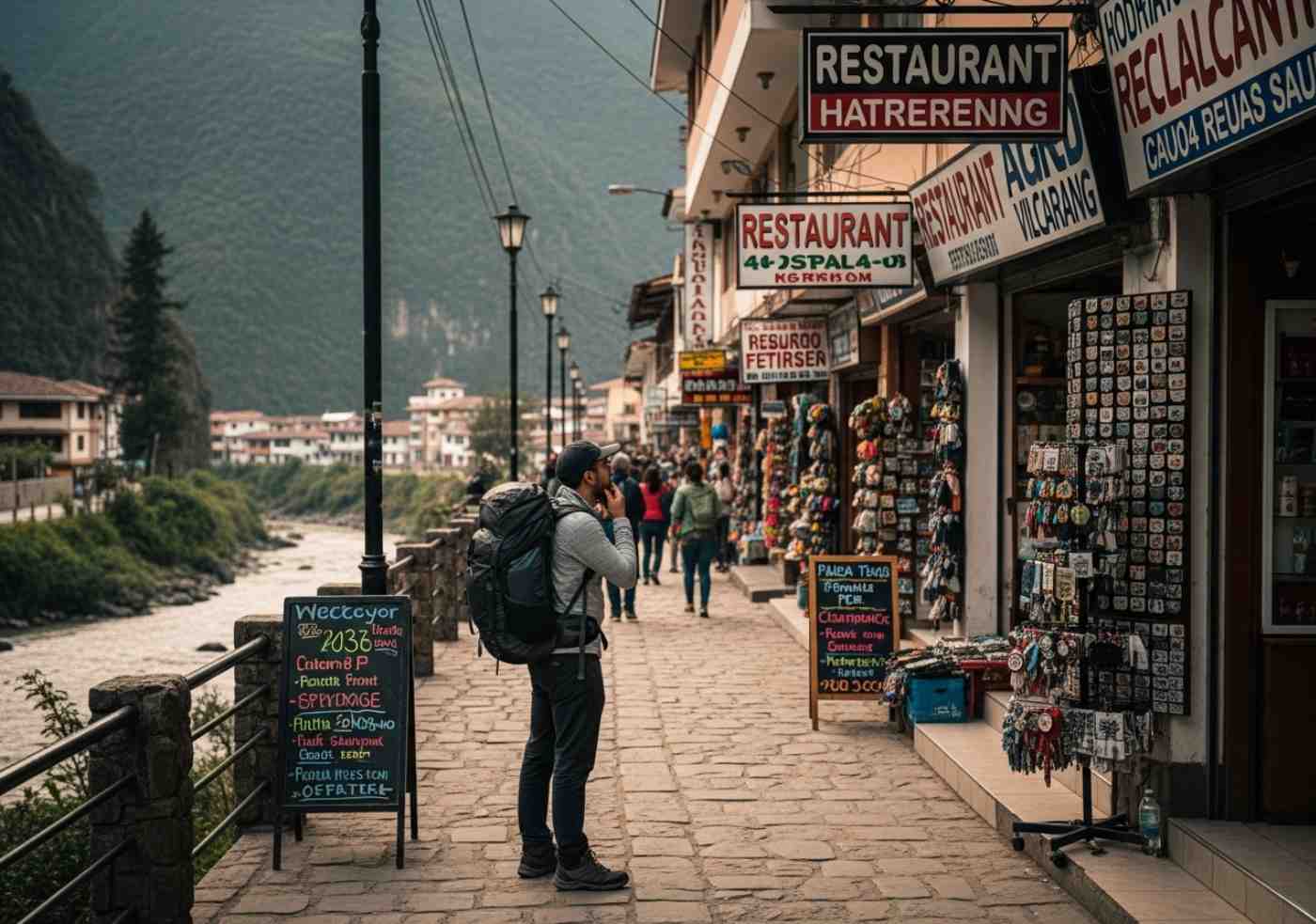
Aguas Calientes (Machu Picchu Pueblo, 2,040 m / 6,692 ft) serves as the compulsory transit choke point for more than four thousand travelers entering the Inca citadel every day. Wedged into a narrow river canyon with zero road connectivity, every crate of vegetables, bottle of water, and clean linen arrives via the PeruRail cargo freight line. That geographic isolation drives up baseline overheads, but it also creates fertile ground for informal touts, inflated tourist menus, and deceptive ticket claims. Knowing how the town operates saves money, prevents friction, and preserves your energy for the sanctuary above.
📌 Consumer Protection Checklist: Aguas Calientes (2,040 m)
- Phantom Service Surcharges: Sidewalk restaurants adding an illegal 10% to 18% service charge to final bills without prior disclosure.
- Street Ticket Resellers: Unofficial hawkers near Plaza Manco Cápac promising sold-out citadel entries that do not exist.
- Aggressive Exchange Margins: Train station exchange counters taking up to an 8% cut compared to official bank rates in Cusco.
- Uninsulated Trackside Hotels: Budget hostels with erratic hot water boilers and zero acoustic isolation from midnight shunting locomotives.
- Turnkey Logistical Solution: Booking organized expeditions like our Inka Jungle Backpacker with private lodging, panoramic trains, and guaranteed government entries.

The Hidden Ten Percent Surcharge on Tourist Street Menus
The most frequent complaint along Avenida Pachacútec involves arbitrary taxes tacked onto restaurant bills.
Street barkers stand outside eateries waving laminated menus with pictures of wood-fired pizzas and trout fillets for 30 to 40 PEN ($8 to $11 USD). Once you finish dining, the bill arrives with an extra 10% “service fee” and an 18% IGV (sales tax). Under Peruvian consumer law enforced by INDECOPI, every published price on a restaurant menu must include all taxes by default. Tacking on surprise percentages at checkout is illegal.
Prevent this by asking one direct question before sitting down: “¿El precio de la carta es neto con todos los impuestos incluidos?” (Is the menu price final with all taxes included?). If staff hesitate or claim tips and service are billed separately, walk away. Established venues such as Indio Feliz, Café Inkaterra, or Tree House maintain fully transparent pricing, clean kitchens, and reliable service.
Snack shops around the train terminal also charge steep markups. A 1-liter bottle of mineral water costing 2.50 PEN ($0.70 USD) in Cusco often sells for 8 to 10 PEN ($2.20 to $2.70 USD) right outside the station gates. Save cash by picking up trail mix, electrolytes, and bottled water from corner convenience stores tucked into residential alleys two blocks uphill from the tracks, or carry them in your daypack from Ollantaytambo.
Street Promises for Sold-Out Machu Picchu Circuit Tickets
No street vendor or freelance guide holds personal allocations for citadel entries that the Ministry of Culture lists as sold out.
Between May and October, high-season demand clears out photographic circuits months in advance. Informal promoters take advantage of desperate arrivals by offering “VIP last-minute slots” or “guide-friend entries” for $120 to $180 USD. These offers are outright scams or involve altered PDF printouts that get flagged at the turnstiles by electronic barcode scanners.
The only legitimate in-person option in town is the Ministry of Culture counter at the municipal Cultural Center. They release up to 1,000 numbered ticket tokens each afternoon for the following day. Securing one requires standing in line for hours with your physical passport in hand and settling for whatever off-peak time slots remain unassigned.
For professionals operating on tight travel schedules, heading to Aguas Calientes without confirmed entrance permits is a high-risk gamble. Licensed tour operators secure nominated circuit passes months ahead, tying each barcode directly to your legal passport number to guarantee entry without bureaucratic delays.
Withdraw Peruvian Soles (PEN) in Cusco before boarding your train. ATMs in Aguas Calientes charge higher transaction fees and frequently run out of bills or drop network connections during peak arrival hours.
The official round-trip bus fare between town and the citadel gate is $24 USD for international adults. Purchase tickets online or at the official brick-and-mortar booth the afternoon prior; never buy printed passes from sidewalk touts.
The True Value of Turnkey Expeditions
Micro-managing hotel check-ins, train luggage limits, and bus lines on your own drains the mental focus you should dedicate to Machu Picchu.
Traveling with a licensed mountain operator takes the friction out of the town. Your hotel is vetted for acoustic insulation away from noisy night switching yards, features high-pressure hot water showers at 2,040 m (6,692 ft), serves hot breakfasts starting at 05:00 AM, and holds your luggage securely while you explore the citadel. An assigned professional guide accompanies your group, managing time slots, answering logistical questions, and making sure your visit runs smoothly.
✨ Golden Rule for Aguas Calientes:
“In transit towns with intense tourist traffic, winging logistics does not save money. It leads to wasted hours, unexpected markups, and avoidable stress. Advance planning with a licensed local operator is the smartest way to protect your trip.”