Inca Trail Packing List: The 5 kg Porter Weight Rule & Gear

Expedition gear logistics on the Inca Trail revolve around a single non-negotiable rule: 5 kilograms (11 pounds). This is the maximum weight allowance our porters will transport in your duffle bag, which includes your sleeping bag and insulating sleeping pad.

Packing for the Classic Inca Trail requires discipline. Because you will hike across stone passes reaching 4,215 meters (13,828 feet) and descend into humid cloud forests, your clothing must handle dramatic 20°C temperature swings without overburdening your pack. Below is our comprehensive gear breakdown tested across thousands of kilometers of Andean trail.

📄 1. Documentation & Cash (Non-Negotiable)

If you forget these items, park rangers will deny entry at the Km 82 checkpoint. There are no exceptions or workarounds:

  • Original Physical Passport: Must be the exact document used during booking. If you renewed your passport after reserving, bring both the old and new physical passports. Photocopies or phone photos are rejected.
  • Valid Student Card (ISIC): If you booked under a student discount, you must present the physical card.
  • Cash in Peruvian Soles (PEN): Small denominations (S/ 10, S/ 20, S/ 50) for local community trail snacks, toilet use on day one (S/ 2), and porter gratuities. There are zero ATMs on the trail until Aguas Calientes.

🧥 2. The Three-Layer Technical Clothing System

Andean weather changes rapidly: you can hike under scorching equatorial sun at midday and face freezing hail or sub-zero wind on Warmiwañusqa Pass two hours later. Leave cotton jeans and heavy sweaters behind. Cotton absorbs sweat, stays wet, and causes severe hypothermia when you stop moving.
Layer 1: Base Layer (Moisture Management)

  • 2 to 3 Synthetic or Merino Wool Shirts: Short-sleeve or long-sleeve technical shirts that wick moisture rapidly away from your skin.
  • 1 Convertible Trekking Pant: Lightweight nylon pant with zip-off legs to adapt to humid cloud forest terrain.
  • Thermal Underwear (Top & Bottom): Synthetic or merino wool, reserved exclusively for sleeping in high mountain camps.

Layer 2: Mid Layer (Thermal Insulation)

  • 1 Lightweight Fleece Jacket (Polartec): Breathable warmth during morning climbs.
  • 1 Compressible Down or Synthetic Loft Jacket: Packable into a compact stuff-sack. Vital for evening camp temperatures at 3,600 meters.

Layer 3: Outer Shell (Weather Armor)

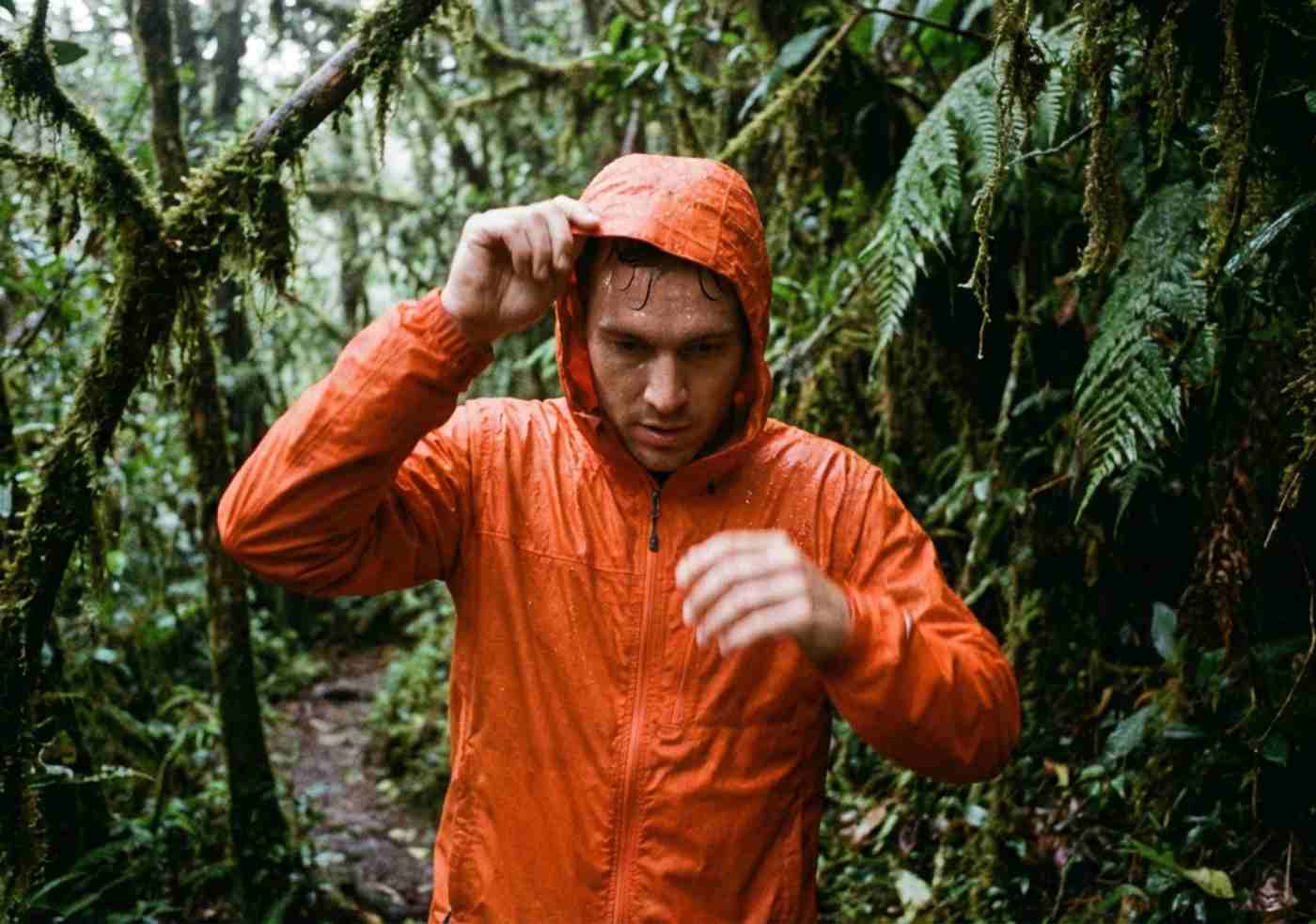
  • Waterproof Breathable Shell Jacket (Gore-Tex or equivalent): Features taped seams and pit-zips to vent heat during ascents.
  • Heavy-Duty Rain Poncho: Highly recommended. Unlike jackets, a poncho breathes from underneath and covers your daypack simultaneously.
Trekker donning a heavy-duty rain poncho over technical hiking layers in a misty Andean cloud forest
Layering technical garments allows instant body temperature regulation without breaking your trail stride.

🦶 3. Footwear: The Trail Foundation

Your boots are your primary equipment. A footwear failure will turn your trek into an endurance test. Review our analysis on Inca Trail difficulty to see why ankle stability is critical over uneven Inca stones.

  • Mid-Cut Hiking Boots: Waterproof with sturdy ankle support and aggressive lugged soles (Vibram). Critical rule: Never hike in brand-new boots. Break them in for at least 3 to 4 weeks prior to arriving in Peru.
  • Camp Sandals or Trail Running Shoes: Lightweight slip-on footwear to air out your feet and walk around camp in the evenings.
  • 4 Pairs of Merino Wool Trekking Socks: Merino wool regulates temperature, cushions high-impact areas, and resists odor over multi-day wear.
Pro Moisture-Management Rule:
Seal every piece of clothing inside individual waterproof dry bags or heavy-duty Ziploc bags before placing them in your duffel bag. Even if a duffel bag has a rain cover, torrential Andean rains can saturate exterior seams. Sleeping in bone-dry thermal clothes is your best defense against backcountry hypothermia.

🧴 4. Hygiene & Personal Medical Kit

Backcountry facilities on the Inca Trail are rustic. Pack for self-sufficient hygiene:
  • Biodegradable Wet Wipes: Your daily evening “sponge bath” inside the tent.
  • Mosquito Repellent (DEET > 25% or Picaridin): Cloud forest sandflies and mosquitoes on Days 3 and 4 are relentless.
  • High-SPF Sunscreen & Polarized Sunglasses: UV radiation at 4,000+ meters causes severe sunburn even through cloud cover.
  • Toilet Paper & Small Plastic Waste Bags: Remove the central cardboard roll to save packing volume.
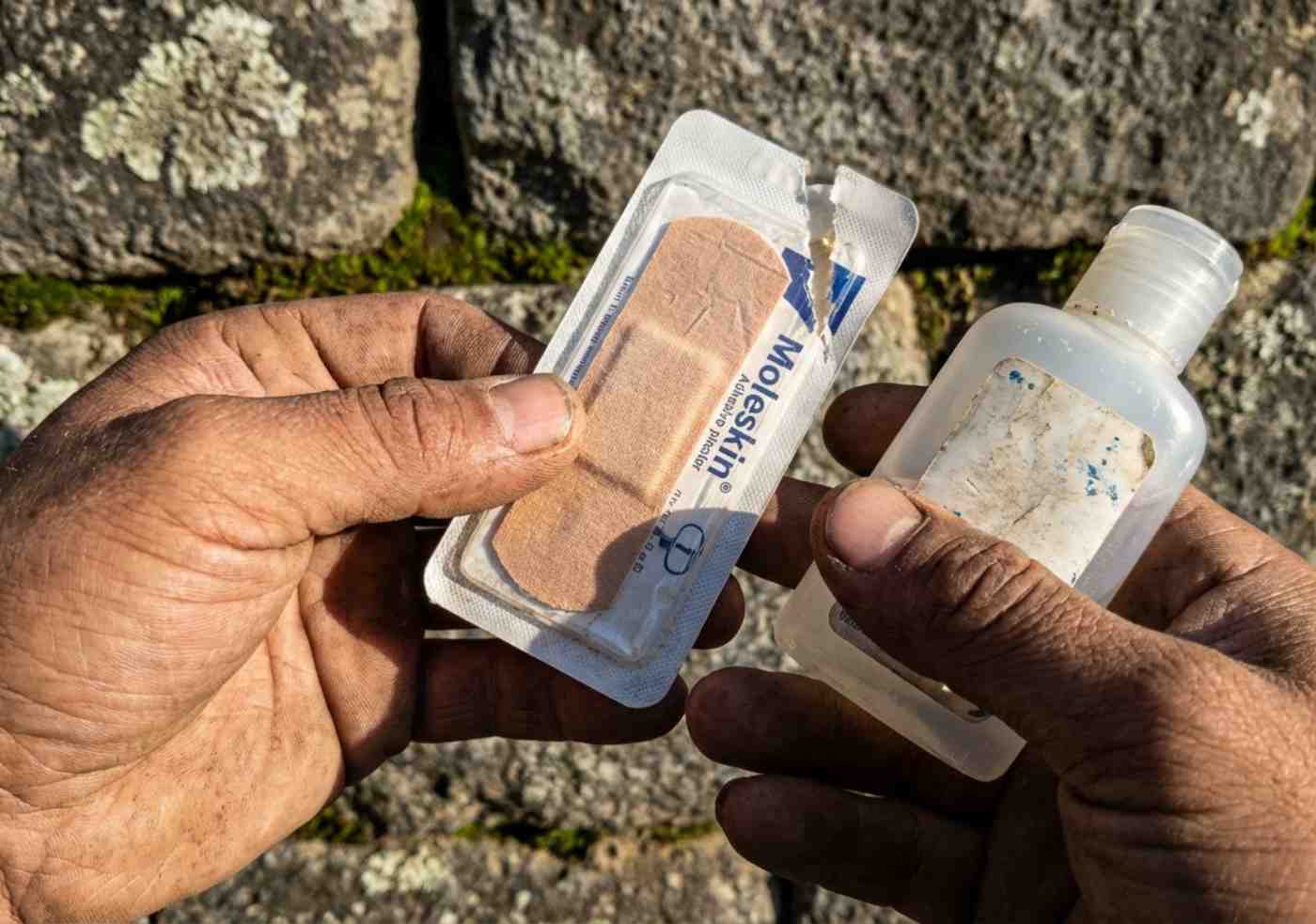
  • Blister Care Kit: Moleskin, Compeed hydrocolloid blister patches, and medical adhesive tape. Apply immediately at the first sign of friction.
  • Personal Medical Essentials: Ibuprofen/Paracetamol, stomach relief (Imodium/Pepto-Bismol), electrolyte rehydration salts, and personal prescriptions.
Trailside hands treating a foot friction spot with hydrocolloid blister patch and disinfectant on an Inca stone
Treating hot spots on your feet with blister patches before they burst prevents debilitating pain on high passes.

🔋 5. Technology & Trekking Accessories

  • LED Headlamp with Extra Batteries: Essential for moving around camp after dark and mandatory for the 3:30 AM pre-dawn walk on Day 4 toward the Sun Gate.
  • High-Capacity Power Bank (20,000 mAh): There are zero electrical outlets along the trail. Cold night temperatures drain phone and camera batteries rapidly.
  • Trekking Poles with Rubber Tips: Required by SERNANP. Bare metal carbide spikes damage the fragile ancient Inca stone steps and are strictly banned by park rangers.
  • Reusable Water Bottles or Hydration Bladder (2 to 3 Liters capacity): Single-use plastic bottles are prohibited on the Inca Trail. Our field crew provides boiled, filtered water after breakfast, lunch, and dinner.

📅 Pack Smart & Hike Freely

Every ounce you leave behind in Cusco translates into saved energy on the climb up Warmiwañusqa Pass. Pack strictly to the 5 kg duffel limit, keep your daypack under 5 kg, and let our professional field crew handle the mountain logistics.

📅 Book your Classic Inca Trail 4-Day expedition with our licensed team.


Ready to pack your duffel? Secure your departure and permits for the Classic Inca Trail 4 Days today.

🛡️ OFFICIAL SERNANP PERMITS & DIRECT LOCAL OPERATION

Secure Your Official Inca Trail Permit

Permits are strictly capped at 500 people per day across the entire trail. Reserve in advance and secure your expedition with licensed porters, mountain chefs, and certified guides from Inka Jungle Tour.

🔒 Inka Jungle Tour • Licensed Local Tour Operator MINCETUR Cusco • Limited Daily Permits
Inca Trail
Ruta Ancestral 4 days

Inca Trail

  • Classic ancestral trail with official permits
  • Mountain campsites & expert local porters
  • Entry to Machu Picchu through the Sun Gate
From $780 USD
Direct Rate
Book Tour Now

Official Ticket Advisory

Machu Picchu Capacity Policy tuboleto.cultura.pe

Machu Picchu entrance permits are strictly nominal and capacity-controlled by Peru's Ministry of Culture. We operate with complete transparency:

Bookings +3 Months Ahead
Circuit 2 Classic

We secure Circuit 2 (Classic Panoramic Full Route) with priority, subject to official quota at confirmation.

Under 60 to 90 Days
Circuit 3 or 1

If Circuit 2 is already sold out, we guarantee the best official alternative (Circuit 3 Royalty or Circuit 1 Panoramic).

Local and Direct Operator All your money directly supports families and communities in Cusco.
Expert and Safe Guides Passionate, bilingual, and certified in Wilderness First Aid.
Small Groups We guarantee an intimate, personalized experience away from the crowds.
Flexible and Secure Booking 24/7 assistance from our team, easy payment options, and clear policies.
David Offline • We will reply first thing in the morning
Hello! We are currently outside office hours, but feel free to leave your inquiry about Inca Trail Packing List and we will reply first thing in the morning.
Just now
🌙 Leave your message, we will reply first...