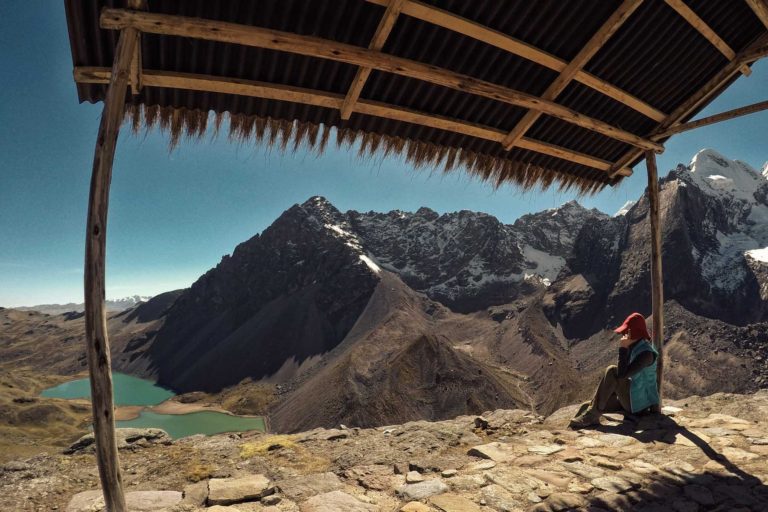
Ausangate Trek Difficulty & Altitude: High Mountain Safety Guide %currentyear%
Mountain Guide Verdict: The Ausangate Trek is rated at Level 5/5 (Extreme Difficulty) for multi-day expeditions and Level 3.5/5 (Moderate-to-Challenging) for the 1-Day 7 Lagoons circuit. Unlike the Inca Trail or Salkantay Trek where you descend into subtropical cloud forest after crossing the high pass, Ausangate stays permanently elevated above 4,200 m (13,780 ft) for days at a time. The combination of sustained thin air, sub-zero nocturnal cold, and steep scree passes requires thorough physical preparation and medical acclimatization.
1. The Primary Challenge: Extreme Altitude & Low Oxygen
At 4,600 m in the Pacchanta lakes basin, atmospheric pressure is roughly 57% of sea level. On high passes like Arapa (4,850 m) or Warmisaya (4,985 m), your body takes in approximately 50% fewer oxygen molecules per breath compared to sea level. Even seasoned endurance athletes will experience heavy breathing, elevated heart rates, and rapid muscle fatigue on moderate inclines.
2. Medical Acclimatization Protocol (Strict Requirement)
Do not attempt any Ausangate hike on your first or second day in Peru. Respecting our altitude safety protocol drastically reduces acute mountain sickness (AMS):
Day Trip (Ausangate 7 Lagoons): Spend a minimum of 48 to 72 hours in Cusco (3,399 m) or the Sacred Valley (2,870 m) undertaking light walking tours before departing.
Multi-Day Trek (4 to 6 Days): Spend a minimum of 3 to 4 full days in Cusco, completing at least one preliminary day hike above 3,800 m (such as Tambomachay or Pisac ruins) to verify your body’s response to elevation.
Hydration & Diet: Drink 3 to 4 liters of water daily, consume complex carbohydrates, avoid alcohol, and carry coca tea or electrolytes. Consult your personal physician regarding preventative Diamox (Acetazolamide) if you are prone to altitude headaches.
3. Extreme Cold & High-Altitude Exposure
Altitude creates an arid alpine climate with massive temperature swings. During the day, direct equatorial solar radiation warms exposed valleys to +12°C or +16°C. The moment the sun drops behind the glacier peaks, thermal radiation escapes into the thin atmosphere, causing temperatures to plummet to -5°C in shoulder season and down to -15°C (5°F) in July and August. Cold-induced hypothermia is a genuine objective hazard for poorly equipped hikers.
4. Operator Safety Protocols on the Trail
Because safety margins in the Vilcanota Range are narrow, Inka Jungle Tour deploys specialized medical and mountain gear on every departure:
Digital Pulse Oximeters: Carried by all guides to monitor blood oxygen saturation (SpO2) and resting heart rates twice daily.
Medical Supplemental Oxygen Tanks: Available on all departures for immediate high-altitude stabilization.
Emergency Saddle Horse: Accompanies every multi-day group to assist any hiker experiencing acute fatigue or altitude distress until reaching road-accessible evacuation points.
Certified WAFA Guides: All lead guides hold active Wilderness First Aid certification recognized by MINCETUR.
Direct Operator Guarantee
Hike Ausangate with Certified Mountain Guides
Operated directly by licensed Cusco mountain specialists with certified WAFA guides, pulse oximeters, and high-altitude emergency safety protocols.
Ausangate 7 Lagoons Day Trip
Full-day alpine hike through turquoise glacial lakes with soothing Pacchanta mineral hot springs.