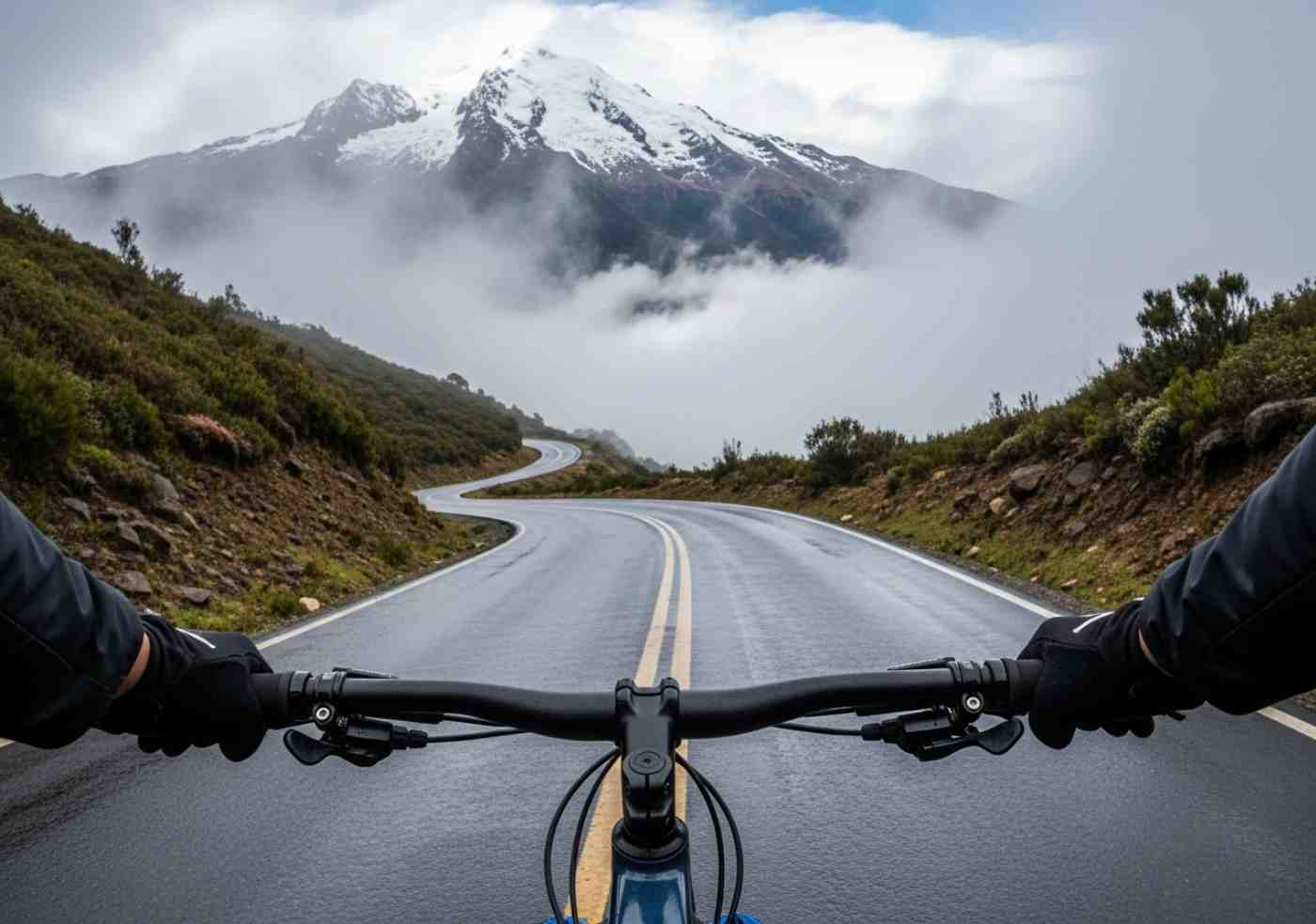
The starting point of the Inka Jungle Trek is an imposing alpine landmark: Abra Malaga pass at 4,316 m (14,160 ft), where cold mountain winds from the glaciated peaks meet warm rising thermals from the Amazon basin. Standing with a mountain bike on this high pass while clouds swirl into the deep gorge can trigger a visceral nervousness, especially for those sensitive to heights. However, this paved highway descent is one of the safest, most exhilarating, and accessible outdoor experiences in Cusco when executed with rigorous safety protocols.
📌 Tech Specs: Downhill Mountain Biking at Abra Malaga
- Total Elevation Drop: Net vertical descent of 2,886 meters (9,468 ft) from 4,316 m down to Huamanmarca at 1,430 m.
- Cycling Distance: 55 km (34.1 miles) entirely along a smooth, well-maintained paved highway.
- Controlled Speed: Regulated caravan formation at moderate cruising speeds of 25 to 35 km/h (15 to 22 mph).
- Permanent Support Van: Private vehicle escorting directly behind; riders who feel tired can board anytime.
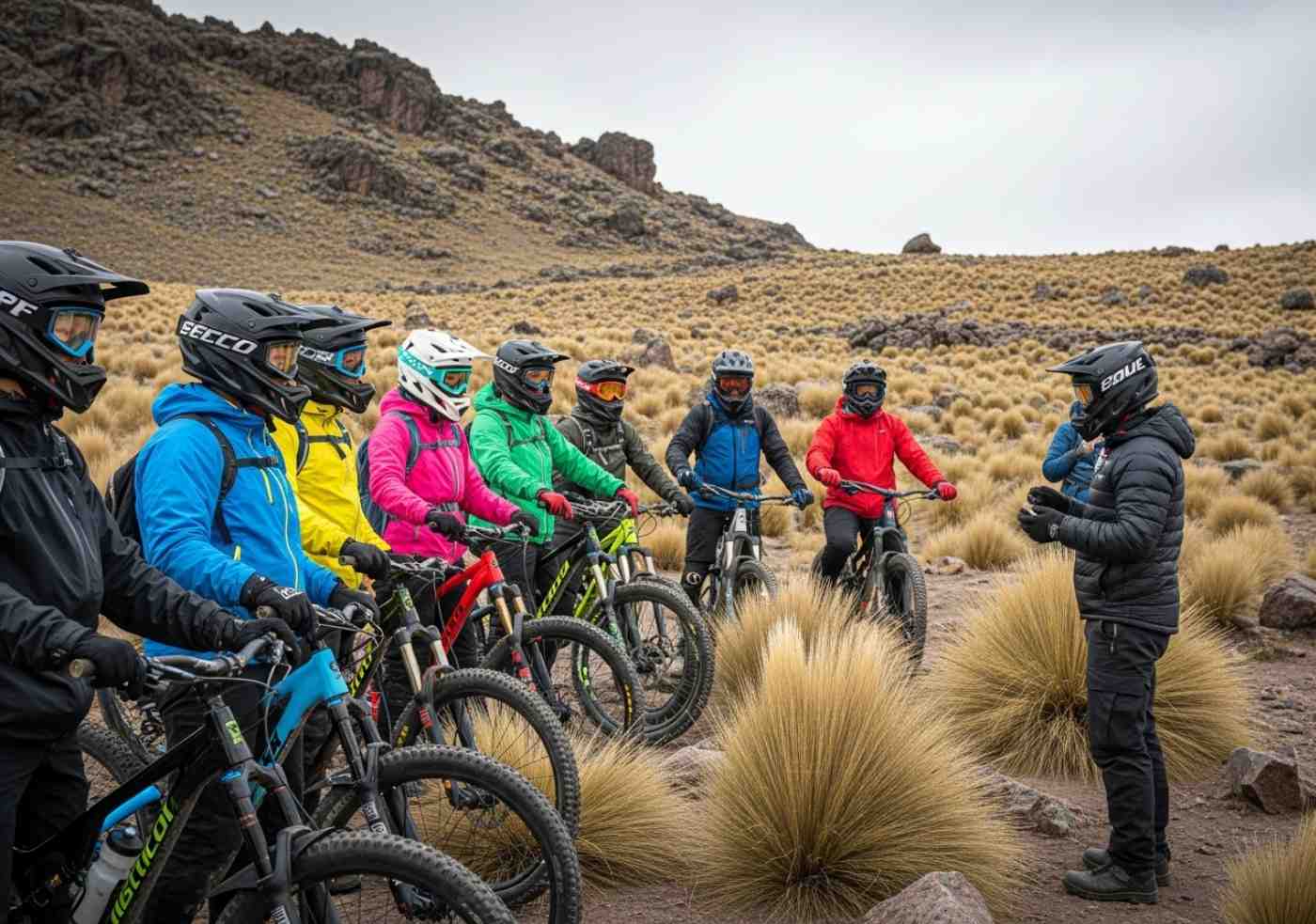
- Provided Equipment: Hydraulic disc-brake mountain bikes, full-face helmets, reflective vests, and armor pads.
The Transition from High Alpine Tundra to Subtropical Cloud Forest
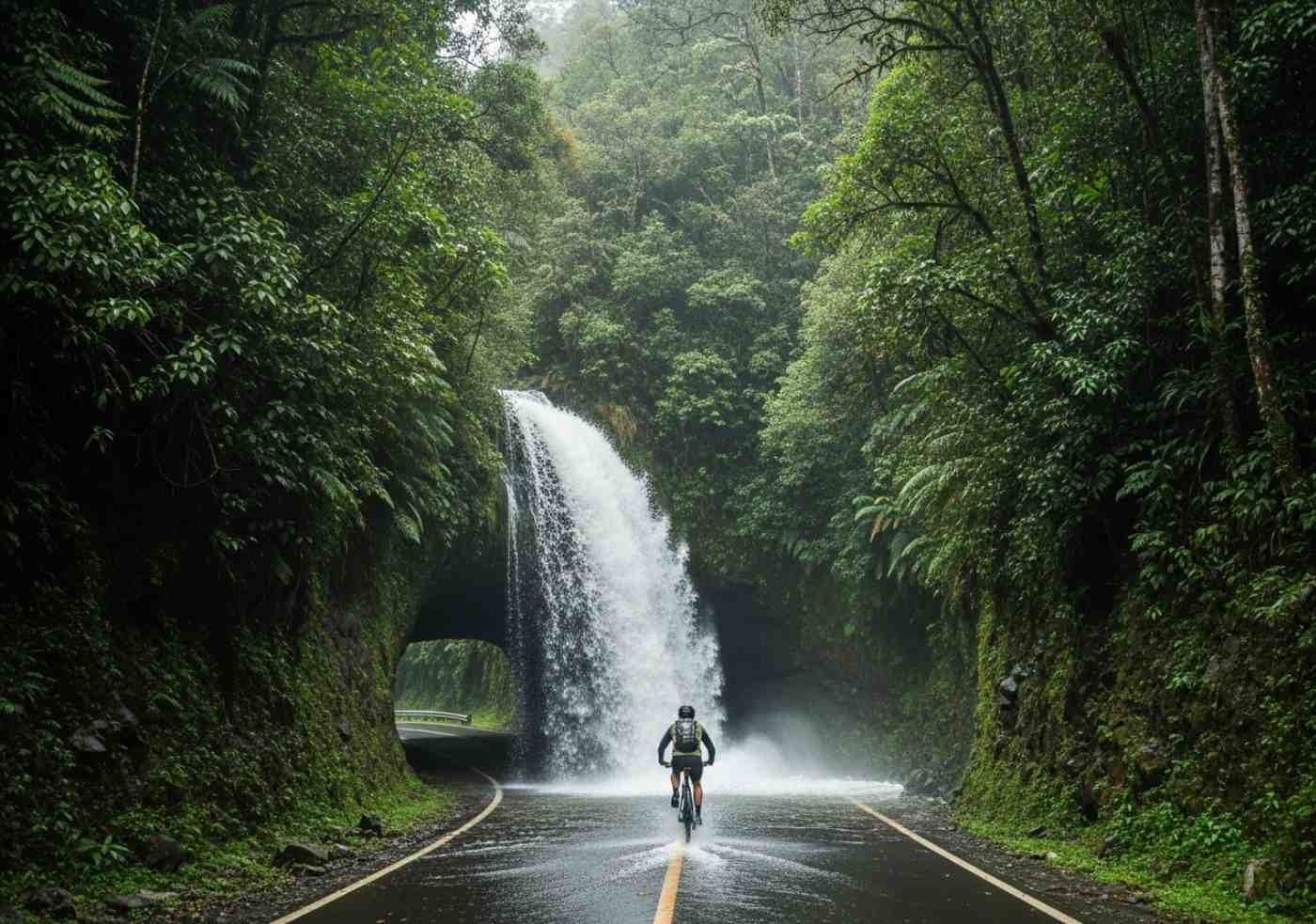
The defining element of the cycling segment on the Inka Jungle is the impressive speed at which the surrounding biosphere transforms. Over roughly two and a half hours of continuous downhill riding, you witness the landscape shift from freezing alpine pastures dotted with ichu grass and distant glaciers down into lush greenery, cascading roadside waterfalls, and native fruit orchards.
The road is completely paved, featuring clear reflective markings and banked curves. The downhill gradient is gentle and steady: gravity propels the bike with minimal need for pedaling, allowing the rider to focus on body posture, looking smoothly ahead through curves, and steady brake modulation.
The Technical Standard: Hydraulic Disc Brakes vs. Cable Rim Brakes
Over a sustained 55 km (34.1 miles) descent, brake friction and heat dissipation are critical to rider safety. Basic commercial bicycles equipped with conventional rubber rim brakes suffer from heat fade, requiring exhausting hand fatigue on the levers and losing stopping bite on wet asphalt.
At Inka Jungle Tour, we equip our entire fleet with hydraulic disc brakes from leading manufacturers like Shimano and Tektro. Mineral oil transfers lever pressure instantly with one-finger modulation, delivering reliable stopping power even on road surfaces damp from mist or rain. Furthermore, we provide full-face helmets offering complete chin protection, alongside certified knee and elbow armor.
Zero-Pressure Support Van for Travelers Sensitive to Heights
Travelers who experience vertigo or nervousness often worry about holding up the group if they decide not to cycle. Our operational protocol is intentionally built to eliminate any hesitation: our private escort vehicle travels with emergency hazard lights directly behind the last rider of the caravan.
If you encounter cold rain, fatigue in your arms, or simply prefer to enjoy the dramatic mountain views from a warm passenger seat, the guide signals the van, secures your bike to the roof rack, and you ride comfortably with heating down to our lunch lodge in Huamanmarca.
Biking Safety Tips for Beginners
| Riding Principle | Proper Technique & Safety Benefit |
|---|---|
| Rear Brake First | Engage the right-hand brake smoothly before balancing with the front left brake. |
| Safe Distance Spacing | Maintain a minimum gap of 10 to 15 meters behind the cyclist in front of you. |
| Look Through the Turn | Focus your vision toward the exit of each curve, never down at the cliff edge. |
| Relaxed Posture | Keep elbows slightly bent to absorb road vibrations without shoulder tension. |
To prevent forearm fatigue over the 55 km descent, our guides schedule three designated resting and regrouping stops at scenic overlooks. These pauses allow cyclists to stretch their hands, drink water, and take photos of the valleys at a relaxed pace.
For those carrying action cameras like a GoPro, remember to mount them using chest harnesses or secure helmet mounts. Riding while holding selfie sticks with one hand is strictly prohibited, as both hands must remain securely positioned on the handlebars for balance and complete control.